Imagine walking into a sleek, glass-enclosed corporate headquarters or a packed stadium. The architecture is stunning and the energy is high, but you look down at your phone and see the signal bars drop to zero. In an era where connectivity is as vital as electricity, dead zones are more than just a nuisance. They are a significant operational risk.
This is where the modern DAS distributed antenna system comes into play. As reliance on mobile data skyrockets, traditional macro cell towers struggle to penetrate modern building materials like Low-E glass and concrete. For building owners and network engineers, the solution is not just about adding more power. It is about distributing that power intelligently.
At Metro Wireless, we see the landscape changing rapidly. The convergence of distributed antenna systems and 5G technology is creating a new standard for in building wireless coverage. This guide takes a deep dive into the technical capabilities of DAS, its critical components, and how it is evolving to meet the demands of tomorrow’s hyper-connected world.
Before moving forward, use this DAS discovery checklist to ensure your deployment is properly planned from the start.
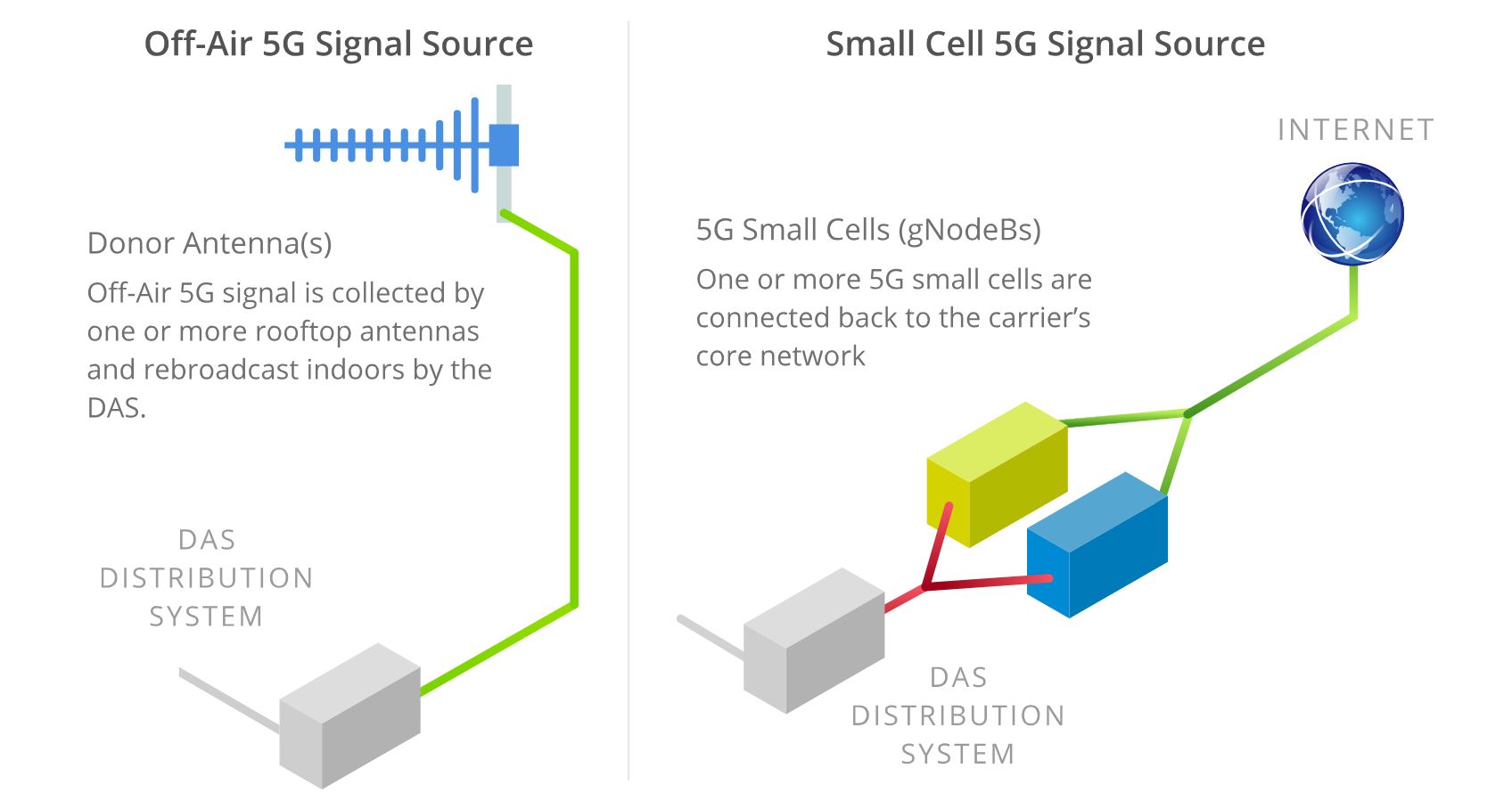
A DAS system is a network of spatially separated antenna nodes connected to a common source via a transport medium, typically fiber optics.These antennas provide wireless service within a geographic area or structure.
Unlike a simple signal booster that merely amplifies an existing weak signal, a true cellular DAS brings the signal source directly to the users. It takes the carrier’s signal from a dedicated source and distributes it evenly throughout a facility. This ensures that a user in the basement parking garage gets the same high-quality connection as someone in the penthouse suite.
For large venues, a distributed antenna system is the only way to guarantee capacity. While wireless internet is excellent for data, it does not support voice calls or public safety communications with the same reliability as a dedicated cellular network.As enterprises move toward more robust wireless infrastructure, understanding the distinction between simple coverage enhancement and a full-scale DAS deployment is vital for future-proofing your property.
The rollout of 5G has shifted the conversation from simple coverage to high-performance capacity. 5G networks, particularly those using millimeter-wave (mmWave) frequencies, offer incredible speeds but suffer from poor propagation.These high-frequency signals cannot easily pass through walls or obstacles.
A 5G distributed antenna system solves this physical limitation. By placing antennas closer to the end-user, DAS bypasses the obstacles that block macro tower signals.This proximity is essential for realizing the low latency and high bandwidth promises of 5G business internet.
Advanced cellular DAS setups utilize specific technologies to optimize this performance:
For telecom solutions planners, this means a network that is not only faster but also more efficient. It ensures that critical applications, from business internet failover systems to real-time IoT sensors, maintain enhanced cellular coverage without interruption.
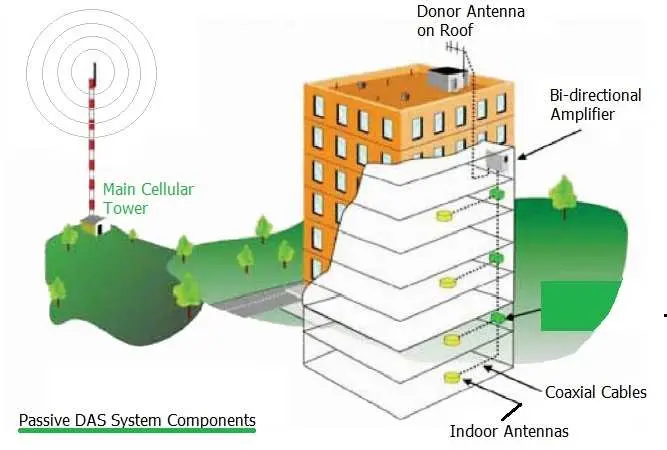
To understand the reliability of these systems, you need to look under the hood. A cellular DAS system is composed of several sophisticated pieces of hardware working in unison to create a seamless blanket of connectivity.
The primary ecosystem includes:
The future of wireless infrastructure is moving toward convergence. We are seeing a shift where 5G distributed antenna system architectures are becoming more software-defined.
One major trend is the rise of Private LTE and 5G networks running on CBRS (Citizens Broadband Radio Service). This allows enterprises to operate their own secure, high-performance networks alongside public carrier signals on the same cellular DAS. This setup acts as a neutral host system, providing flexibility and security.
Furthermore, the industry is moving toward cloud-managed DAS solutions. This evolution allows IT managers to monitor the health of their distributed antenna systems remotely, ensuring uptime and simplifying troubleshooting. As a commercial internet provider focused on innovation, Metro Wireless sees these software-driven advancements as key to delivering scalable enterprise connectivity.
In high-density environments like stadiums, hospitals, and airports, the challenge is not just coverage. It is capacity. When thousands of people try to upload videos or make calls simultaneously, a standard network collapses.
Distributed antenna systems excel here because they split the coverage area into smaller sectors. This allows the network to reuse frequencies, effectively multiplying the total capacity. For a hospital, this means doctors can rely on mobile medical apps without lag. For a stadium, it means fans can live-stream the game.
This is often deployed as a carrier neutral DAS, meaning it supports AT&T, Verizon, T-Mobile, and others simultaneously. For a building owner, installing a cellular DAS system that supports all carriers is a massive value-add, increasing tenant satisfaction and property value.
Deploying a system of this magnitude requires precision. It is not a plug-and-play solution but a bespoke engineering project.
The typical deployment workflow involves:
A DAS system is a significant capital investment. The costs involve hardware, professional installation, and carrier integration fees. However, the Return on Investment (ROI) is compelling.
For commercial real estate, in building wireless coverage is now a utility expected by tenants, much like water or electricity.Buildings with poor cellular reception face higher vacancy rates. For enterprises, the ROI comes from productivity. Eliminating dropped calls and slow data speeds keeps your workforce efficient. Additionally, a properly installed cellular DAS serves as a foundation for future technologies, supporting wireless failover and backup internet solutions to ensure business continuity.
The demand for data is not slowing down. As we move deeper into the 5G era, the reliance on a robust DAS distributed antenna system will only increase. These systems provide the backbone for high-speed, low-latency connectivity that modern businesses and venues demand.
Whether you need to upgrade an aging network or are planning a new development, Metro Wireless has the expertise to guide you. From dedicated internet access to complex DAS deployments, we deliver telecom solutions that perform when it matters most.
Ready to future-proof your building’s connectivity? Contact Metro Wireless today to discuss your custom DAS solution.

Tyler Hoffman
CEO


.jpg)


